A trading journal helps you record why you took a trade, how it was executed, and what happened afterwards. This guide shows seven practical steps to build a trading journal for forex, gold, stocks, or copied trades—and use it to review decisions, not just profits.
1. Record the plan before the trade
Write down the market, date, direction, setup and reason for entry before opening a position. Add your planned entry, stop-loss, target and position size. Record the information you had at the time: a later chart can make a decision look more obvious than it was.
2. Define the initial risk
Note the intended loss in your account currency if the planned stop is reached. For illustration, a $5,000 account with $50 of planned risk has 1% of its balance at risk before costs. Actual loss can differ because of gaps, slippage, spread and execution. Check the instrument’s contract size and broker specifications before calculating position size.
Initial risk is often called 1R. If the planned risk is $50 and a trade closes with a $75 profit after relevant costs, its result is +1.5R. A $60 net loss is −1.2R. These are examples, not expected outcomes. Record the original risk even if you later change the stop.
3. Capture the actual execution
After closing, add the actual entry and exit, trade size, gross result, commissions, swap and other applicable costs. Compare the planned and filled prices. For copied positions, record both accounts’ fills where available: differences in timing, spreads and broker execution can change results. Our guide to copy trading slippage explains what to compare.
4. Separate the decision from the result
A losing trade can follow a sound plan; a winning trade can break it. Mark whether your entry, size, exit and risk followed your written rules. Note deviations without rewriting the original plan. A screenshot taken at entry and another at exit can help preserve the context.
5. Use a simple trading journal template
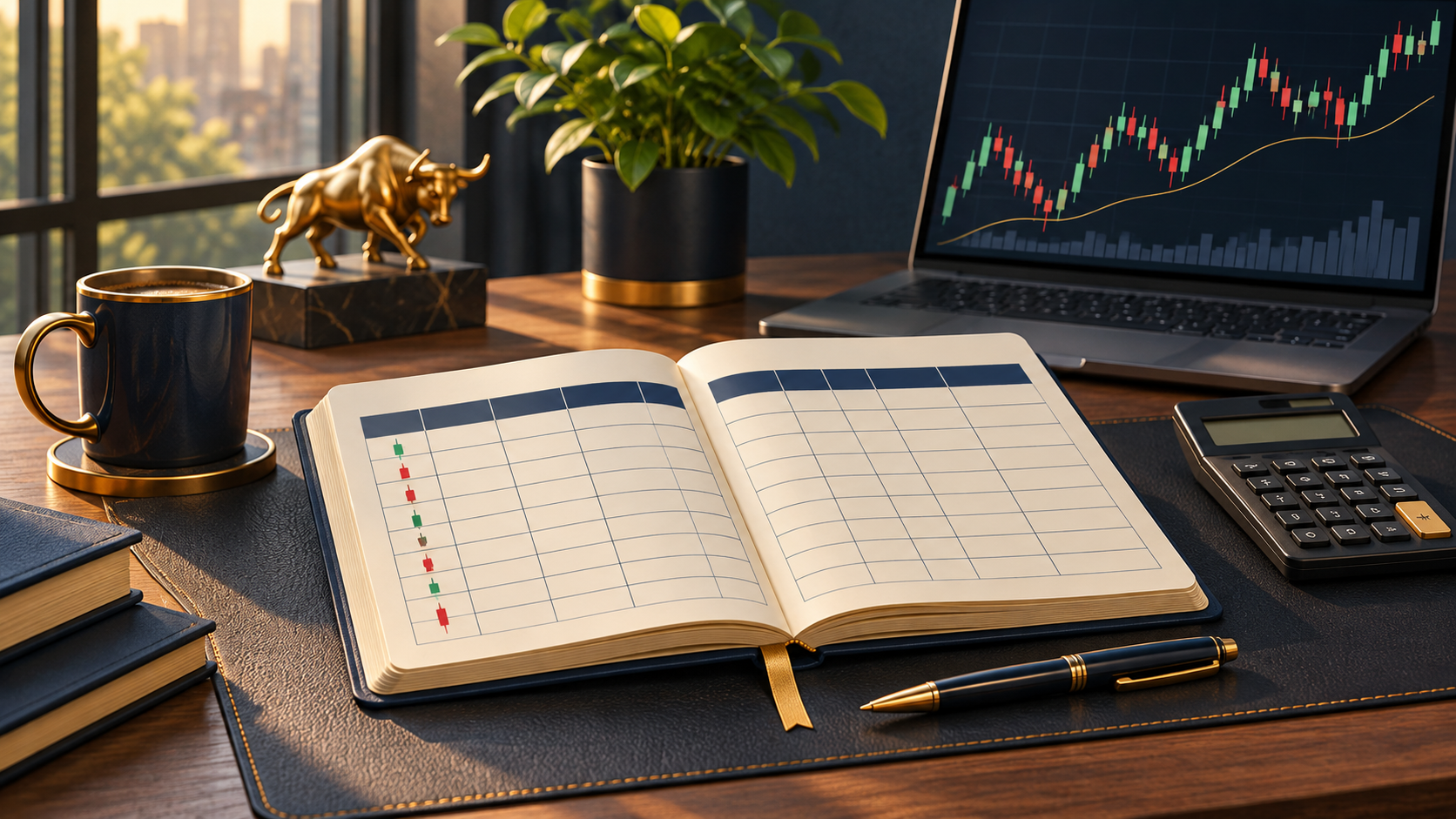
A spreadsheet or notebook is sufficient. Keep the same fields for every trade so that entries can be compared:
- Date, instrument, direction and setup.
- Planned entry, stop, target, position size and initial risk.
- Actual fills, exit, costs and net result.
- Result in R, if initial risk is known.
- Whether the plan was followed, execution notes and one lesson.
For copied trades, add the source and follower timestamps and any differences in size or symbol. Protect account information when storing or sharing your records.
6. Review patterns, not isolated wins
At a regular review, group trades by setup or market and check the number of observations. Compare planned risk with actual losses, look for repeated rule breaks and examine costs. A small sample can be misleading, and changing several rules at once makes it difficult to understand what caused a difference.
Win rate is only one part of the picture. Average wins, average losses and costs also matter. See our trading win rate guide for a closer look. Track open positions separately from closed results so floating losses do not disappear from the review.
7. Turn the review into one clear action
Choose a specific process issue you can observe next time, such as recording the planned stop before entry or checking spread before placing an order. Review whether you followed that action in the next set of trades. Journaling can support more consistent analysis, but it cannot guarantee a profitable strategy.
Trading journal questions
Should I include losing trades?
Yes. Include every trade in the period you are reviewing, including losses, partial exits and costs. Selecting only attractive outcomes can distort the conclusions.
Can I use a trading journal for copy trading?
Yes. Record the settings, fills and results on your own account, then compare them with the source where possible. Different balances, lot sizes, execution and fees can make results differ.
Explore IQQTrading’s copy trading service and Tramaxis trading technology to learn more about the tools and setup. Trading involves risk, and past results do not guarantee future performance. This article is educational and is not personal investment advice.
Further reading: CME Group: Keep a Trade Log and Risk Management and Your Trade Plan.